






/NASA’s%20Artemis%20III%20Announcement%20(Official%20NASA%20Trailer)~thumb.jpg)


Tiny Daphnis appears as a bright dot in the Keeler Gap next to shadows cast by the moon and the edge waves it has created in the A ring in this image taken by NASA Cassini spacecraft before Saturn August 2009 equinox.
Ver en NASA ↗🚀 Biblioteca espacial oficial
Imágenes y vídeos de NASA
Explora el catálogo multimedia público de NASA sin salir de TuPortalNews.
Explora temas destacados
Selecciona un tema o realiza una búsqueda personalizada.
4.237 resultados en NASA
A moon shadow strikes Saturn rings near bright spokes on the B ring near the center of this image taken by NASA Cassini spacecraft about one month after the planet August 2009 equinox.
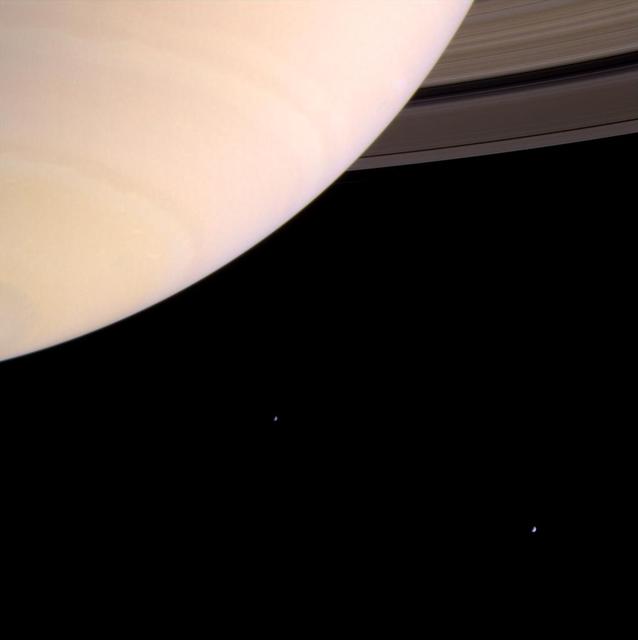
Ver en NASA ↗Two moons orbit serenely before Saturn while large storms churn through the planet southern hemisphere in this image taken by NASA Cassini spacecraft. The moon Mimas is on the right. Dione is on the left.
Ver en NASA ↗This anaglyph, shows huge mountains on Saturn moon Iapetus, imaged by NASA Cassini spacecraft during its very close flyby in Sept. 2007. 3D glasses are necessary to view this image.
Ver en NASA ↗A large crater can be seen in the southern hemisphere of Saturn two-tone moon Iapetus. Lit terrain seen here is on the trailing hemisphere while the leading hemisphere is extremely dark and whose trailing hemisphere is as white as snow.
Ver en NASA ↗This image from NASA Cassini spacecraft shows the location of an area known as Sotra Facula on Saturn moon Titan. Scientists believe the Sotra Facula region makes the best case for a cryovolcanic, or ice volcano, region on Titan.
Ver en NASA ↗The moon Tethys occupies the right foreground of this Saturnian scene. This view from NASA Cassini spacecraft looks toward the anti-Saturn side of Tethys and toward the northern, sunlit side of the rings from just above the ringplane.
Ver en NASA ↗Saturn small moon Prometheus, slightly overexposed in this image taken by NASA Cassini spacecraft, shows off its potato-like shape as it orbits in the Roche Division between the A ring and thin F ring.
Ver en NASA ↗Saturn moon Enceladus, imaged at high phase, shows off its spectacular water ice plumes emanating from its south polar region in this image captured by NASA Cassini spacecraft.
Ver en NASA ↗This view of the unlit side of Saturn rings captures the small shepherd moon Pandora as it swings around the outside of the F ring. The F ring displays a few discrete bright clumps here
Ver en NASA ↗This false-color mosaic, made from infrared data collected by NASA Cassini spacecraft, reveals the differences in the composition of surface materials around hydrocarbon lakes at Titan, Saturn largest moon.
Ver en NASA ↗A darkly defined Rhea passes before the fuzzy orb of Titan in this view from NASA Cassini spacecraft of Saturn two largest moons. Rhea is closer to the spacecraft in this view.
Ver en NASA ↗A network of river channels is located atop Xanadu, the continent-sized region on Saturn moon Titan. This radar image was captured by the Cassini Radar Mapper on April 30, 2006
Ver en NASA ↗NASA Cassini spacecraft looks toward an area between the trailing hemisphere and anti-Saturn side of Tethys and spies the large crater Melanthius near the moon south pole.
Ver en NASA ↗This image is part of a set of images obtained by NASA Cassini spacecraft showing a propeller-shaped structure created by a hidden, embedded moon moving through one of Saturn rings. An animation is available at the Photojournal.
Ver en NASA ↗Five moons, dominated by Rhea in the foreground, share NASA Cassini spacecraft view with Saturn rings seen nearly edge-on. Also seen here are Dione, Epimetheus, Prometheus, and Tethys.
Ver en NASA ↗This pair of false-color images, made from data obtained by NASA Cassini spacecraft, shows clouds covering parts of Saturn moon Titan in yellow, while Titan hazy atmosphere appears magenta.
Ver en NASA ↗The small moon Janus overtakes the larger moon Rhea in a dance played out before Saturn and its rings in this image taken by NASA Cassini spacecraft. Go to the Photojournal to view the animation.
Ver en NASA ↗Saturn rings cut across an eerie scene that is ruled by Titan luminous crescent and globe-encircling haze, broken by the small moon Enceladus, whose icy jets are dimly visible at its south pole. North is up
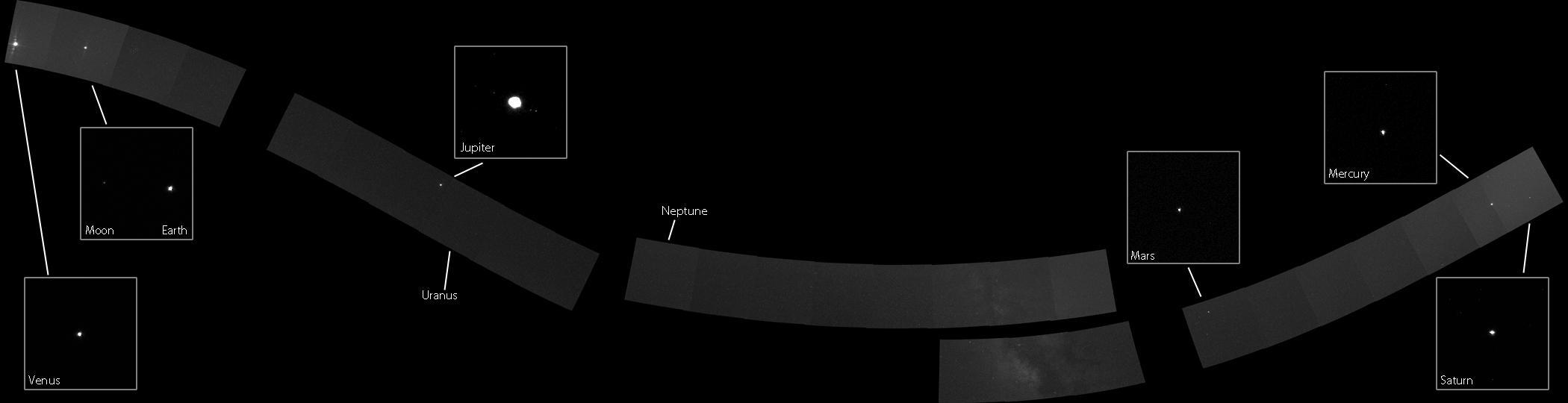
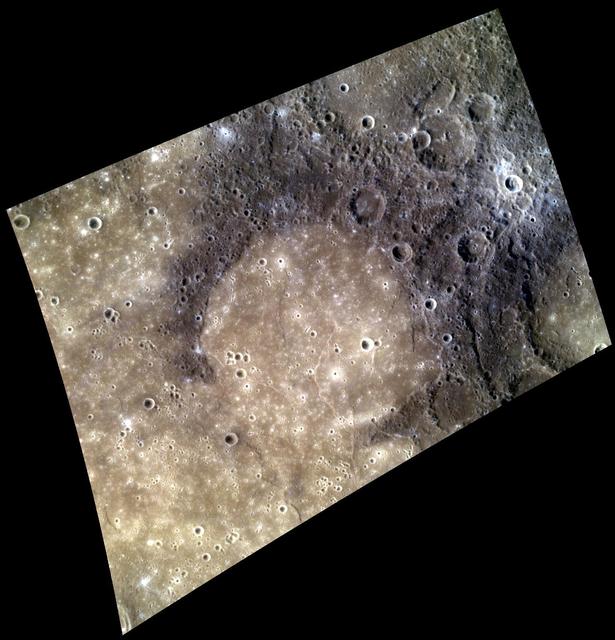
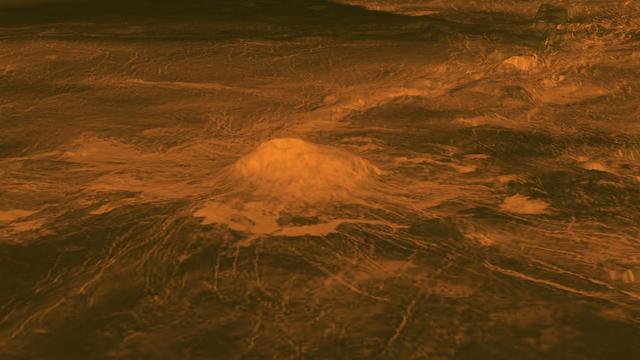
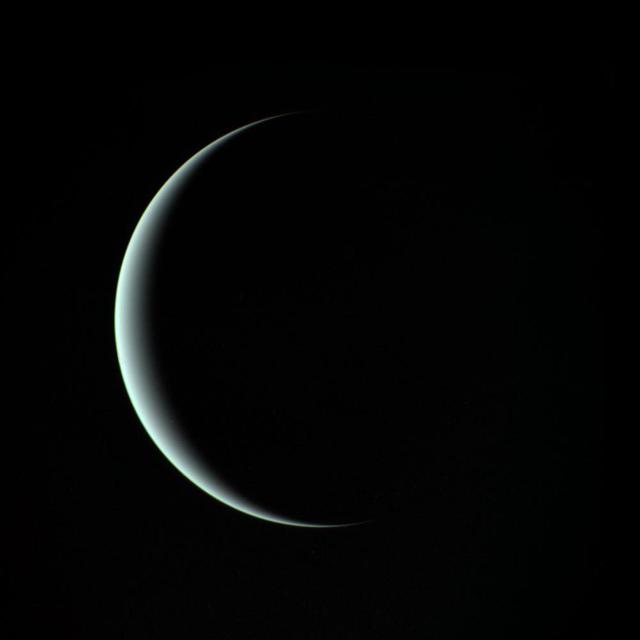
Ver en NASA ↗This is an updated montage of planetary images taken by spacecraft managed by NASA’s Jet Propulsion Laboratory in Pasadena, CA. Included are from top to bottom images of Mercury, Venus, Earth and Moon, Mars, Jupiter, Saturn, Uranus and Neptune.
Ver en NASA ↗These three images, created from NASA Cassini Synthetic Aperture Radar SAR data, show the appearance and evolution of a mysterious feature in Ligeia Mare, one of the largest hydrocarbon seas on Saturn moon Titan.
Ver en NASA ↗Saturn rings occupy the foreground of this image captured by NASA Cassini spacecraft. The small moon Janus appears to hover above, while the far larger moon Rhea is partially obscured by the rings.
Ver en NASA ↗Graceful giant Saturn poses with a few of the small worlds it holds close. From this viewpoint the Cassini spacecraft can see across the entirety of the planet shadow on the rings, to where the ringplane emerges once again into sunlight
Ver en NASA ↗Saturn moon Dione passes in front of the larger moon Titan, as seen from NASA Cassini spacecraft. This image is part of a mutual event sequence in which one moon passes close to or in front of another.
Ver en NASA ↗Contenido y metadatos proporcionados por la NASA Image and Video Library.