






/NASA’s%20Artemis%20III%20Announcement%20(Official%20NASA%20Trailer)~thumb.jpg)

Saturn moon Enceladus, seen beyond the outline of the planet night side, spews water ice from its south polar region. The plumes can be faintly seen at the bottom of the moon in this image from NASA Cassini spacecraft.
Ver en NASA ↗🚀 Biblioteca espacial oficial
Imágenes y vídeos de NASA
Explora el catálogo multimedia público de NASA sin salir de TuPortalNews.
Explora temas destacados
Selecciona un tema o realiza una búsqueda personalizada.
4.237 resultados en NASA
The Cassini spacecraft captures a spectacular view of Saturn banded southern hemisphere and dark central polar storm, while its dazzling rings lie far beyond the horizon
Ver en NASA ↗The shepherd moon Pan orbits Saturn in the Encke gap while the A ring surrounding the gap displays wave features created by interactions between the ring particles and Saturnian moons in this image from NASA Cassini spacecraft.
Ver en NASA ↗In a laboratory experiment at NASA Jet Propulsion Laboratory, Pasadena, Calif., scientists simulate the atmosphere of Saturn moon Titan. In this picture, molecules of dicyanoacetylene are seen on a special film on a sapphire window.
Ver en NASA ↗This radar image, obtained by Cassini radar instrument during a near-polar flyby on Feb. 22, 2007, shows dunes surrounding a bright feature on Saturn moon Titan
Ver en NASA ↗Relatively dark regions below bright crater walls and streaks on some of the walls are seen in this mosaic of Saturn moon Mimas, created from images taken by NASA Cassini spacecraft during its closest flyby of the moon.
Ver en NASA ↗NASA Cassini spacecraft examines old and new terrain on Saturn fascinating Enceladus, a moon where jets of water ice particles and vapor spew from the south pole. Newly created terrain is at the bottom, in the center and on the left of this view.
Ver en NASA ↗In this view captured by NASA Cassini spacecraft on its closest-ever flyby of Saturn moon Mimas, large Herschel Crater dominates Mimas, making the moon look like the Death Star in the movie Star Wars.
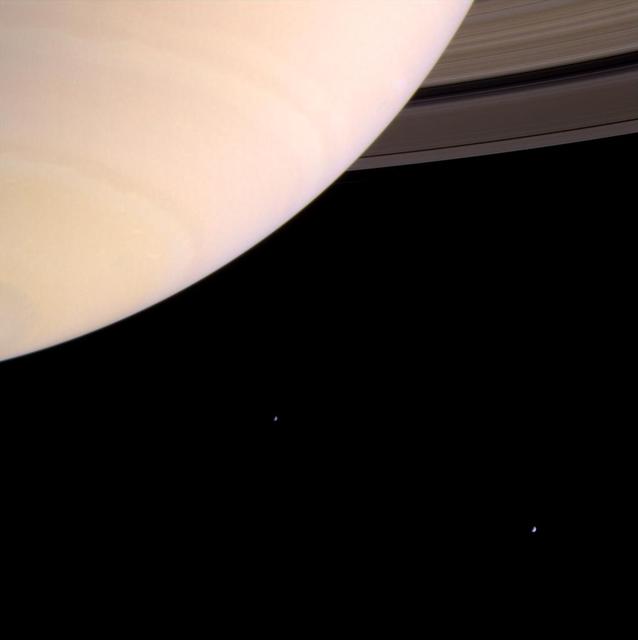
Ver en NASA ↗NASA Cassini spacecraft captured Enceladus above the rings and Rhea below. The comparatively tiny speck of Atlas can also be seen just above and to the left of Rhea, and just above the thin line of Saturn F ring.
Ver en NASA ↗This global digital map of Saturn moon Enceladus was created using data taken during Cassini and Voyager spacecraft flybys. The map is an equidistant projection and has a scale of 110 meters 361 feet per pixel
Ver en NASA ↗A pastel crescent of Saturn is interrupted by the moon Mimas and the rings in this color image captured by NASA Cassini spacecraft. Mimas 396 kilometers, or 246 miles across appears as a dark speck just above the rings.
Ver en NASA ↗Data from NASA Cassini spacecraft have enabled scientists to make the highest-resolution heat intensity maps yet for the hottest part of a tiger stripe fissure on Saturn moon Enceladus.
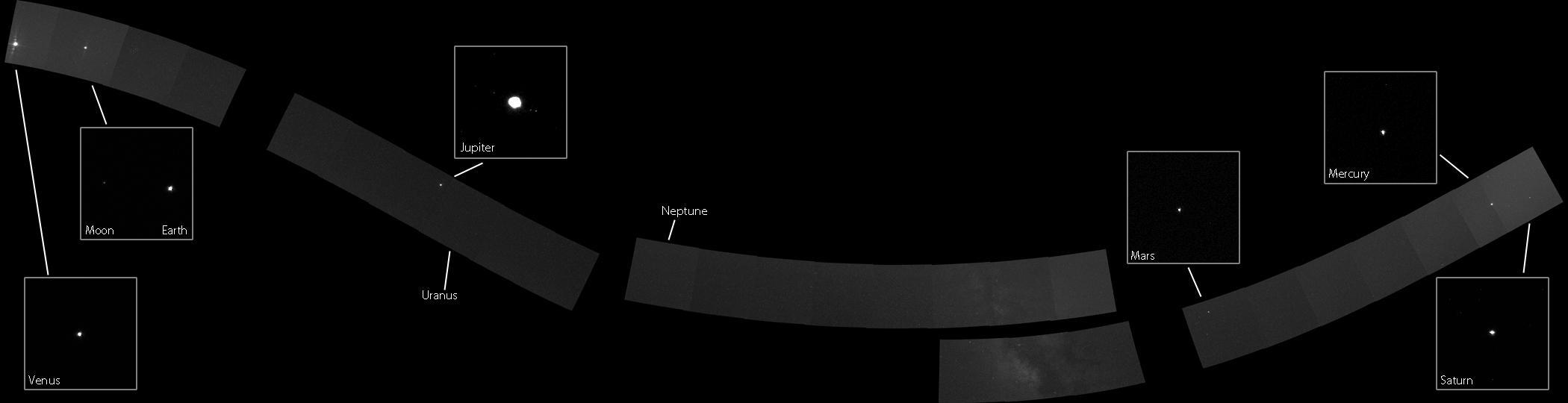
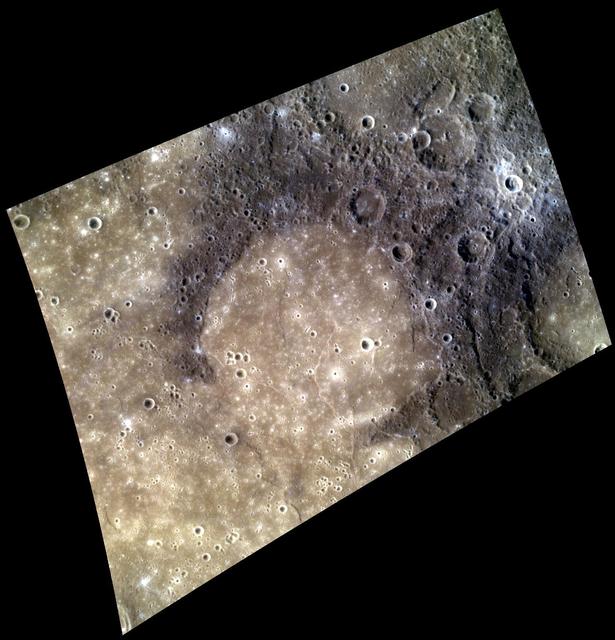
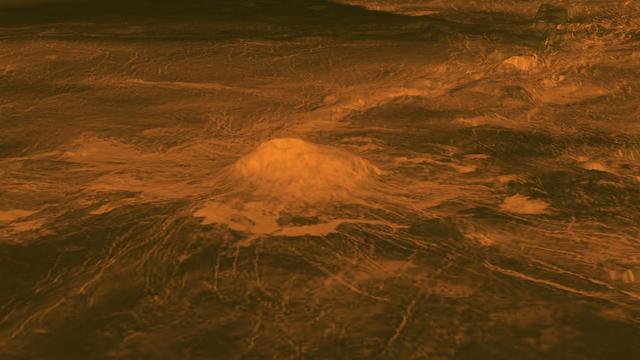
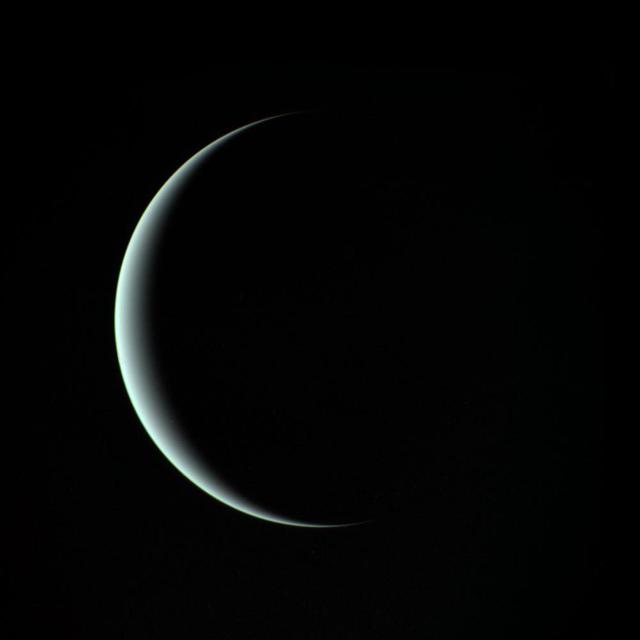
Ver en NASA ↗This is a montage of planetary images taken by spacecraft managed by NASA’s Jet Propulsion Laboratory in Pasadena, CA. Included are from top to bottom images of Mercury, Venus, Earth and Moon, Mars, Jupiter, Saturn, Uranus and Neptune.
Ver en NASA ↗This wide and sweeping view of the sunlit rings of Saturn takes in the impressive variety in their structure -- from the clumpy and perennially intriguing F ring to the many waves, ringlets and gaps in the A and B rings and the Cassini Division in between
Ver en NASA ↗Seasonal changes in the atmosphere of Saturn largest moon are captured by NASA Cassini spacecraft, which shows Titan with a slightly darker top half and a slightly lighter bottom half.
Ver en NASA ↗NASA Cassini imaging scientists processed this view of Saturn moon Dione, taken during a close flyby on June 16, 2015. This was Cassini fourth targeted flyby of Dione.
Ver en NASA ↗A propeller-shaped structure created by an unseen moon appears dark in this image obtained by NASA Cassini spacecraft of the unilluminated side of Saturn rings. The propeller is marked with a red arrow in the top left.
Ver en NASA ↗NASA Cassini spacecraft spies two types of waves in Saturn A ring: a spiral density wave on the left of the image and a more pronounced spiral bending wave near the middle.
Ver en NASA ↗This cutaway view of Saturn moon Enceladus is an artist rendering that depicts possible hydrothermal activity that may be taking place on and under the seafloor of the moon subsurface ocean, based on published results from NASA Cassini mission.
Ver en NASA ↗Ultracold hydrocarbon lakes and seas dark shapes near the north pole of Saturn moon Titan can be seen embedded in some kind of bright surface material in this infrared mosaic from NASA Cassini mission.
Ver en NASA ↗This image shows the visual and infrared mapping spectrometer instrument just before it was attached to NASA Cassini spacecraft. Cassini launched in 1997 and has been exploring the Saturn system since 2004.
Ver en NASA ↗This frame from a colorized flyover movie from NASA Cassini mission shows the two largest seas on Saturn moon Titan and nearby lakes. The liquid in Titan lakes and seas is mostly methane and ethane.
Ver en NASA ↗A vertically extended structure or object in Saturn F ring casts a shadow long enough to reach the A ring in this Cassini image taken just days before planet August 2009 equinox.
Ver en NASA ↗NASA Cassini spacecraft captured a three-dimensional view of the large Herschel Crater on Saturn moon Mimas during its closest-ever flyby of the moon. 3D glasses are needed to view this image.
Ver en NASA ↗Contenido y metadatos proporcionados por la NASA Image and Video Library.