





/NASA’s%20Artemis%20III%20Announcement%20(Official%20NASA%20Trailer)~thumb.jpg)

This composite of 30 images of asteroid 2014 JO25 was generated with radar data collected using NASA's Goldstone Solar System Radar in California Mojave Desert.
Ver en NASA ↗🚀 Biblioteca espacial oficial
Imágenes y vídeos de NASA
Explora el catálogo multimedia público de NASA sin salir de TuPortalNews.
Explora temas destacados
Selecciona un tema o realiza una búsqueda personalizada.
7.277 resultados en NASA
NASA Spitzer Space Telescope set its infrared eyes on an extraordinarily low-mass brown dwarf called OTS 44 and found a swirling disc of planet-building dust shown in this artist concept.
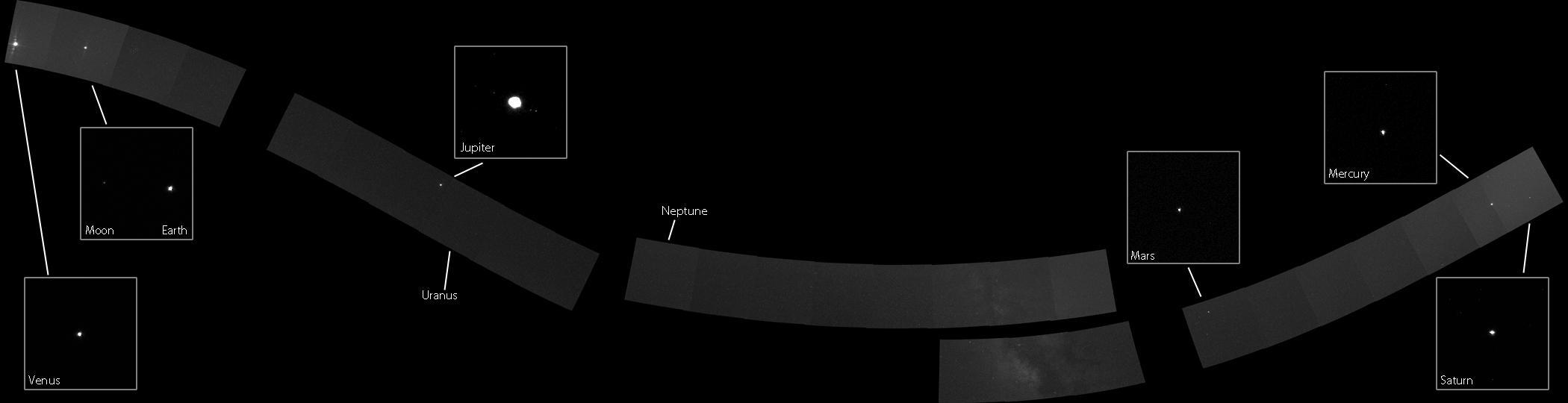
Ver en NASA ↗This is a montage of planetary images taken by spacecraft managed by NASA’s Jet Propulsion Laboratory in Pasadena, CA. Included are from top to bottom images of Mercury, Venus, Earth and Moon, Mars, Jupiter, Saturn, Uranus and Neptune.
Ver en NASA ↗This image from NASA's Mars Odyssey shows the upper flank of Olympus Mons. Olympus Mons is the largest volcano in the solar system.
Ver en NASA ↗Artist rendition of the formation of rocky bodies in the solar system; how they form and differentiate and evolve into terrestrial planets.
Ver en NASA ↗This image from NASA's Mars Odyssey shows the upper flank of Olympus Mons. Olympus Mons is the largest volcano in the solar system.
Ver en NASA ↗During STS-31, the Hubble Space Telescope (HST) grappled by the remote manipulator system (RMS) end effector is held in appendage deploy position above Discovery, Orbiter Vehicle (OV) 103. The solar array (SA) bistem cassette has been released from its latch …
Ver en NASA ↗This diagram compares our own solar system to Kepler-22, a star system containing the first habitable zone planet -- the sweet spot around a star where temperatures are right for water to exist in its liquid form, discovered by NASA Kepler mission.
Ver en NASA ↗This artist diagram compares our solar system below to the VB 10 star system. Astronomers successfully used the astrometry planet-hunting method for the first time to discover a gas planet, called VB 10b, around a very tiny star, VB 10.
Ver en NASA ↗In this diagram, the Vega system, which was already known to have a cooler outer belt of comets orange, is compared to our solar system with its asteroid and Kuiper belts. The ring of warm, rocky debris was detected using NASA Spitzer Space Telescope,
Ver en NASA ↗This artist concept illustrates a solar system that is a much younger version of our own. Dusty disks, like the one shown here circling the star, are thought to be the breeding grounds of planets, including rocky ones like Earth.
Ver en NASA ↗This plot of data from NASA Spitzer Space Telescope reveals the light from a uper Earth called 55 Cancri e. The planet is the smallest yet, beyond our solar system, to reveal its direct light.
Ver en NASA ↗Cassini briefly turned its gaze from Saturn and its rings and moons to marvel at the Carina Nebula, a brilliant region 8,000 light years from our solar system and more than 200 light years across
Ver en NASA ↗Artist rendering of NASA Stardust capsule returning to Earth. The Stardust spacecraft will bring back samples of interstellar dust, including recently discovered dust streaming into our Solar System from the direction of Sagittarius.
Ver en NASA ↗NASA Voyager 1 spacecraft has entered a new region between our solar system and interstellar space, which scientists are calling the stagnation region as depicted in this artist rendering.
Ver en NASA ↗Studying meteorites from the asteroid Vesta helps scientists understand the event known as the lunar cataclysm, when a repositioning of the gas giant planets destabilized a portion of the asteroid belt and triggered a solar-system-wide bombardment.
Ver en NASA ↗New ultraviolet images from NASA Galaxy Evolution Explorer shows a speeding star that is leaving an enormous trail of eeds for new solar systems. The star, named Mira pronounced my-rah after the latin word for wonderful.
Ver en NASA ↗Although the largest volcanoes on Mars and in the solar system are located in the geologically young Tharsis region, there are many Martian volcanoes that display equally interesting features, such as Hadriaca Patera in this NASA Mars Odyssey image.
Ver en NASA ↗This illustration compares the size of a gargantuan star and its surrounding dusty disk top to that of our solar system. Monstrous disks like this one were discovered around two hypergiant stars by NASA Spitzer Space Telescope.
Ver en NASA ↗This graphic shows the relative positions of NASA most distant spacecraft in early 2011, looking at the solar system from the side. Voyager 1 is the most distant spacecraft, 10.9 billion miles away from the sun at a northward angle.
Ver en NASA ↗NASA Galileo spacecraft observed Io on nearly every orbit as part of a program monitoring the level of volcanic activity on this moon. Io is the most volcanically active body in the Solar System.
Ver en NASA ↗Olympus Mons, imaged here by NASA Mars Odyssey spacecraft, stands 26 km above the surrounding plains, which is three times taller than Mt. Everest, and is the tallest volcano in the solar system.
Ver en NASA ↗This image taken by NASA Mars Reconnaissance Orbiter covers the northern edge of the largest volcano in the solar system, Olympus Mons on Mars; its margin is defined by a massive cliff many kilometers several miles tall.
Ver en NASA ↗This image from NASA Mars Reconnaissance Orbiter covers a small portion of the northwest quadrant of Hellas Basin, or Hellas Planitia, on southern Mars; Hellas is one of the largest impact craters in the solar system.
Ver en NASA ↗Contenido y metadatos proporcionados por la NASA Image and Video Library.